 RxDown
Evidence reviewed through:
⚕️ This article is education, not medical advice. Every claim is sourced below. Never stop or change medication without your prescriber — some medications are dangerous to stop abruptly.
CBT-I During Pregnancy and Postpartum: Evidence, Adaptations, and Limits
Key answer
Randomized trials indicate that adapted cognitive behavioral therapy for insomnia (CBT-I), including digital and telehealth delivery, can reduce prenatal insomnia symptoms and improve sleep quality. Some studies also report lower postpartum depressive symptoms or higher insomnia remission, but mental-health effects are not consistent enough to treat CBT-I as a replacement for depression, anxiety, bipolar, or postpartum-psychosis care. [1–6]
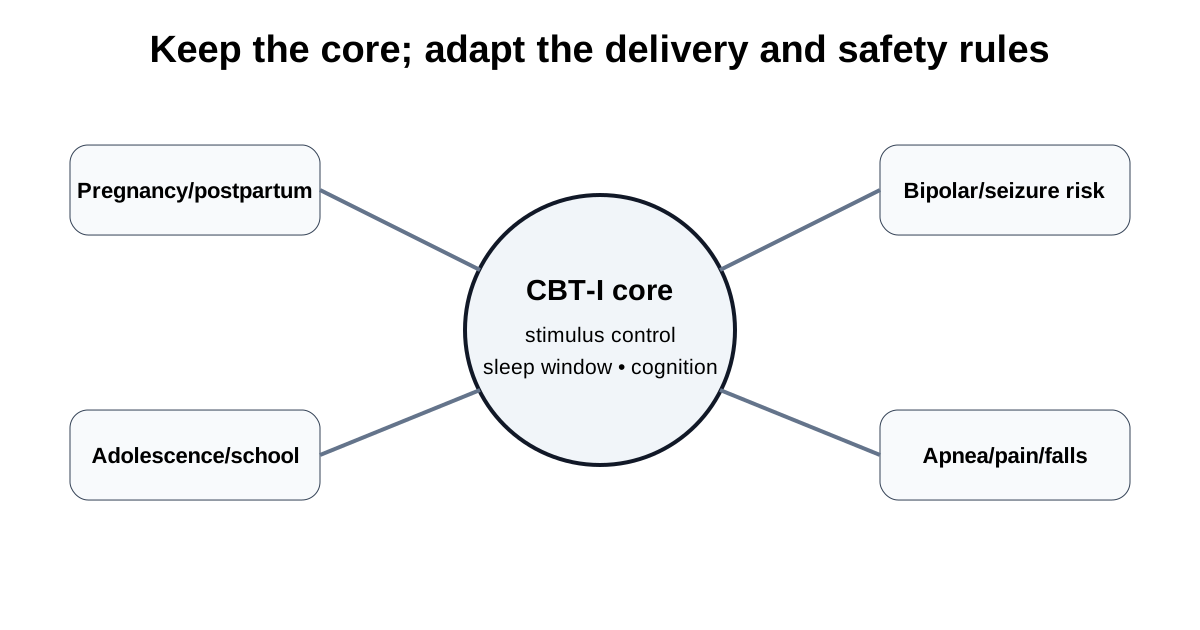
Postpartum treatment must distinguish chronic insomnia from expected infant-related awakenings. Sleep-window therapy, naps, partner support, feeding plans, and nighttime safety often require adaptation. Medication initiation or reduction remains a separate shared decision with the obstetric, psychiatric, primary-care, and pediatric teams as applicable.
At a glance
| Question | Current evidence |
|---|---|
| Does prenatal CBT-I improve insomnia? | Yes on average in several randomized trials, including in-person, digital, and telehealth formats. [1–5] |
| Does it prevent postpartum depression? | Some trials show direct or indirect benefit, but this is not established for every population. [2,4,6] |
| Is standard sleep restriction always appropriate? | No. Pregnancy fatigue, driving, nausea, pain, medical risk, and infant care may require a gentler or flexible approach. |
| Can it replace evaluation for apnea or restless legs? | No. Both can be relevant in pregnancy and need specific assessment. |
| Can CBT-I direct medication tapering? | No. Medication changes require a separate perinatal risk–benefit plan. |
What the trials studied
A three-site randomized trial in pregnant participants with diagnosed insomnia found CBT-I improved insomnia severity compared with an active control. Digital trials also found benefits during pregnancy, with mixed postpartum results depending on outcome and time point. A newer trial followed participants from pregnancy to six months postpartum and found sustained improvement in sleep quality and fewer insomnia diagnoses at later follow-up. [1–5]
These studies do not represent every pregnancy. Common exclusions included major psychiatric illness or other conditions affecting sleep. Sample sizes were modest, and postpartum sleep is strongly influenced by infant sleep, feeding, support, and return-to-work conditions.
Adaptations during pregnancy
- Sleep opportunity: Avoid a rigidly short sleep window when daytime sleepiness, nausea, anemia, pain, or occupational driving creates risk.
- Position and comfort: Reflux, pelvic pain, urinary frequency, fetal movement, and sleep position may require environmental and behavioral changes.
- Screening: Snoring, witnessed apneas, restless legs, iron deficiency, thyroid symptoms, depression, anxiety, and bipolar history need attention.
- Naps: A blanket prohibition can be unrealistic. Planned, time-limited naps may be safer than involuntary dozing.
- Medication coordination: Do not start, stop, or taper an antidepressant, benzodiazepine, Z-drug, antihistamine, or DORA solely because CBT-I begins.
Adaptations after birth
The first question is whether wakefulness is opportunity-limited by infant care or maintained by insomnia when an opportunity to sleep exists. A parent who is awake because an infant needs feeding has a different problem from a parent who remains hyperaroused after returning to bed.
Practical treatment can include protected sleep periods, shared nighttime care where feasible, flexible stimulus control, management of intrusive worry, and a realistic diary that marks infant-driven awakenings separately. Advice must account for safe infant care and local safe-sleep guidance.
Mood and urgent safety
Insomnia can coexist with postpartum depression, anxiety, obsessive thoughts, bipolar disorder, or postpartum psychosis. CBT-I does not replace urgent assessment for confusion, hallucinations, delusions, severe agitation, rapidly rising energy with little need for sleep, immediate self-harm risk, or thoughts of harming the infant. Those are not routine insomnia-program side effects.
Medication and tapering questions
Pregnancy and lactation alter the risk–benefit discussion for both continued medication and withdrawal. Abruptly stopping a dependence-forming medication or antidepressant can cause harm. The correct plan depends on indication, relapse history, gestational timing, infant exposure, formulation, and available alternatives. CBT-I may support sleep but does not make a rapid taper safe.
What to track
Track sleep opportunities, infant-driven awakenings, estimated sleep, naps, mood, anxiety, intrusive thoughts, energy, medication timing, caffeine, restless-legs symptoms, snoring, and daytime safety. Note whether a support person can provide a protected sleep period.
Frequently asked questions
Is digital CBT-I evidence-based in pregnancy?
Randomized trials support benefit in selected pregnant participants. Program quality, screening, adherence, and access to clinical support still matter.
Can CBT-I improve postpartum depression?
Some studies show improvement or a lower risk signal, but CBT-I is not a complete depression treatment and should not delay mental-health care.
Should a postpartum parent leave the bed whenever awake?
Not rigidly. Infant safety, feeding, exhaustion, mobility, and household conditions require adaptation.
Is insomnia after birth always normal?
No. Sleep disruption is common, but persistent inability to sleep during available opportunities, severe distress, dangerous sleepiness, or mood symptoms deserves assessment.
References
- Manber R, et al. Cognitive Behavioral Therapy for Prenatal Insomnia: a randomized controlled trial. 2019. Evidence type: Randomized controlled trial. Use: Prenatal insomnia efficacy in a selected population.
- Felder JN, et al. Digital CBT-I in pregnant women: randomized controlled trial. 2020. Evidence type: Randomized controlled trial. Use: Digital delivery and perinatal sleep outcomes.
- Felder JN, et al. Digital CBT-I for prenatal insomnia: postpartum insomnia and mental-health follow-up. 2021. Evidence type: Randomized trial follow-up. Use: Mixed postpartum insomnia outcomes and mental-health signals.
- MacKinnon AL, et al. CBT-I delivered in pregnancy and secondary postpartum depression outcomes. 2024. Evidence type: Randomized trial secondary analysis. Use: Direct and indirect depression effects with stated limitations.
- MacKinnon AL, et al. Sleeping for Two: randomized trial of CBT-I in pregnancy. 2025. Evidence type: Randomized controlled trial. Use: Insomnia, sleep quality, and six-month postpartum follow-up.
- CBT-I in postpartum depression: meta-analysis of therapeutic outcomes and implementation barriers. 2026. Evidence type: Meta-analysis of four studies. Use: Pooled signal and small evidence base; not definitive prevention proof.

Bring real data to your doctor
Generate a clinician-ready Doctor Report in SBAR format with trend charts, plus clean CSV and PDF exports. Walk into your next appointment with evidence, not guesswork.
RxDown is a data tracking and journaling tool for adults (18+). It does not provide medical advice, diagnosis, or treatment. Never stop taking medication or change your dose based solely on information from this app or website — medication reduction should always be supervised by a qualified healthcare professional.