 RxDown
Come off your medication one gentle step at a time
RxDown is a diary for medication withdrawal. Speak for thirty seconds a day — the AI captures your dose, sleep, mood, and symptoms, spots patterns, and turns your experience into a report your doctor can actually use.
Free to use. Built on the Maudsley Deprescribing Guidelines, the Ashton Manual, and Royal College of Psychiatrists guidance.
RxTaper is now RxDown — same app, your data is untouched.


RxDown is a medication-withdrawal diary app for iOS and Android. It helps adults who are working with a doctor to gradually reduce antidepressants, benzodiazepines, sleeping pills, opioids, or other long-term prescriptions — by logging dose, sleep, mood, and withdrawal symptoms in seconds a day, and turning that record into clear, clinician-ready data.
How does RxDown work?
Log in seconds — just talk
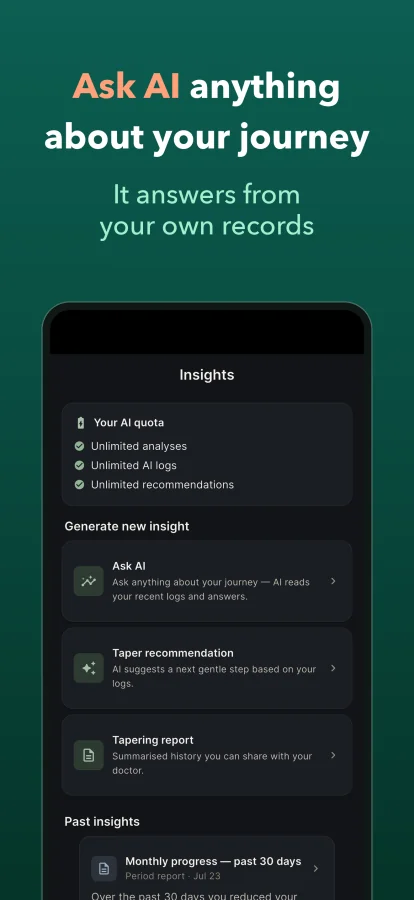
Don't feel like typing on a foggy day? Speak. The AI (powered by Gemini) captures your dose, sleep, mood, and physical sensations, and you review every entry before it saves.
See the patterns
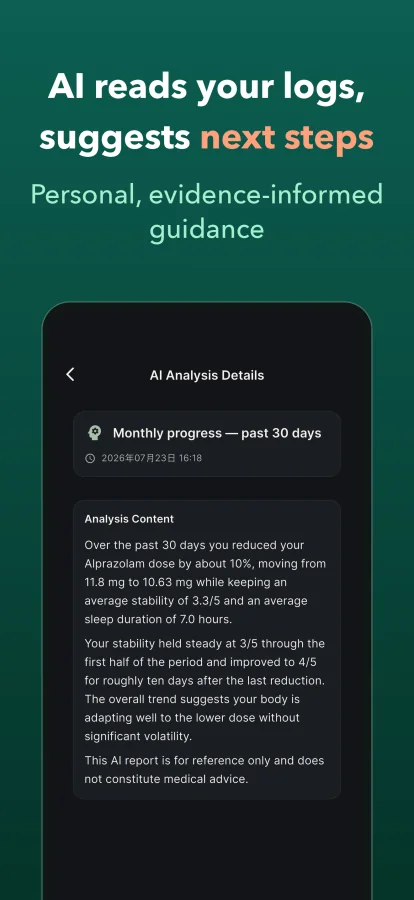
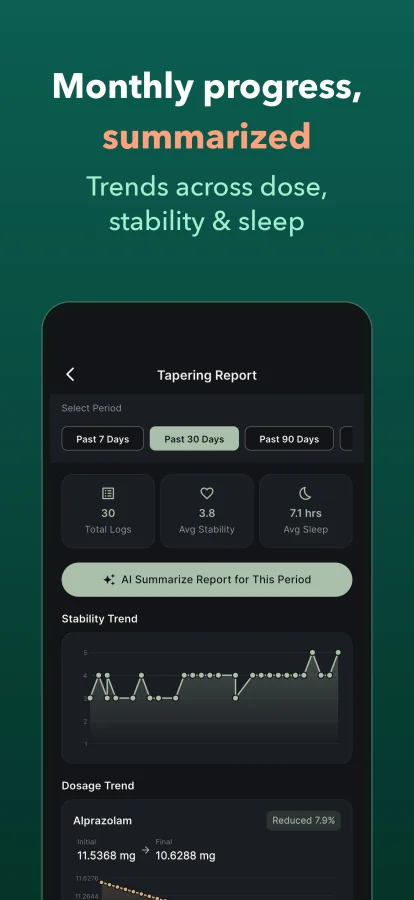
Dose curve, stability score, sleep pattern, and symptom timeline in one place — so you can see whether a reduction affects your sleep or mood days later.
Bring real data to your doctor
Generate a clinician-ready Doctor Report in SBAR format with trend charts, plus clean CSV and PDF exports. Walk into your next appointment with evidence, not guesswork.
What can RxDown do?
🎙️ AI voice journaling
Thirty seconds of talking becomes a structured entry: dose, sleep hours, mood, symptoms, and notes — reviewed and editable before saving.
📉 Receptor occupancy, made visible NEW
See why the last few milligrams matter most. RxDown plots estimated receptor occupancy alongside your dose curve, based on the hyperbolic model described by Horowitz & Taylor and the Maudsley Deprescribing Guidelines.
📚 Guideline-based schedules
Reduction plans grounded in the Maudsley Deprescribing Guidelines, the Ashton Manual, and Royal College of Psychiatrists references — with hold and reinstate as first-class states, not failures.
💊 Benzodiazepine & Z-drug education NEW
Ashton-based guidance with diazepam-equivalence references, plus formulation tips for the tiny doses at the end of a reduction — liquids, compounded preparations, careful dispersion.
😴 Automatic sleep import NEW
Connect Apple Health or Health Connect and your sleep lines up with your dose changes on one timeline — no manual entry.
📄 Doctor Report (SBAR) NEW
A clinician-ready summary in SBAR format with trend charts and a plain-language AI narrative — plus CSV and PDF exports of your full history.
Inside the app
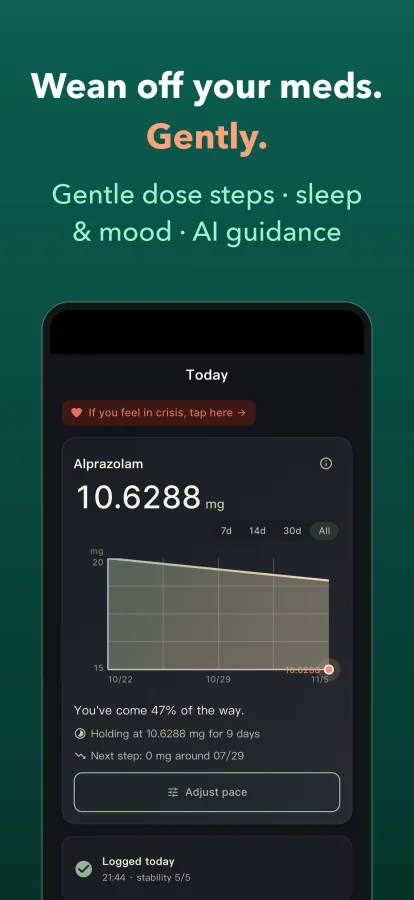
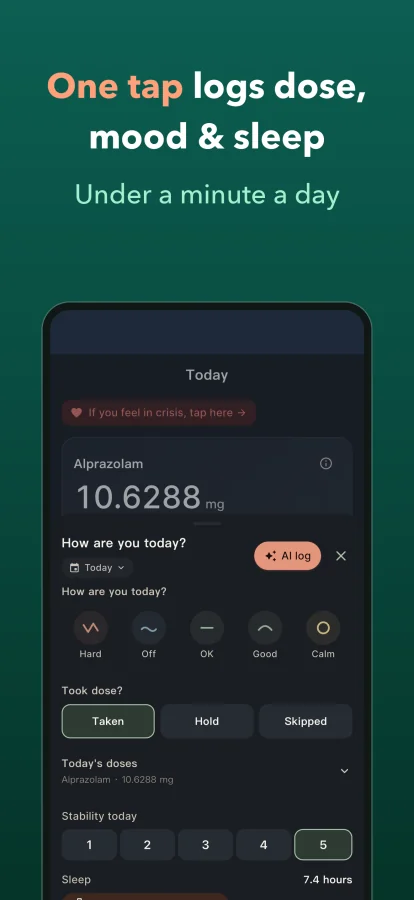
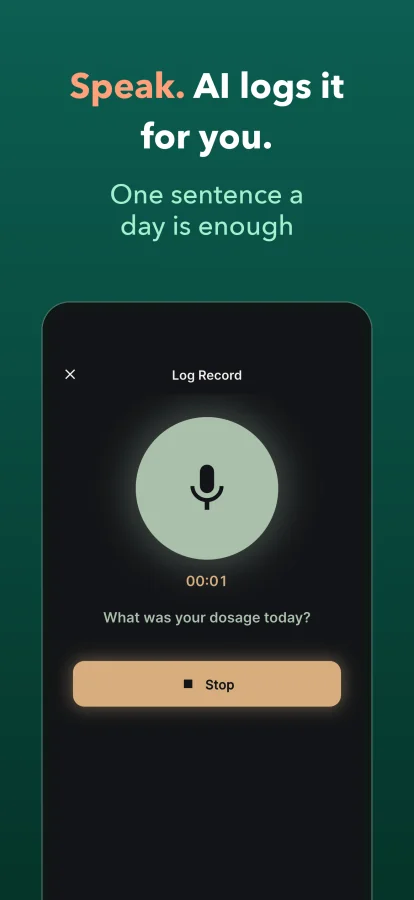
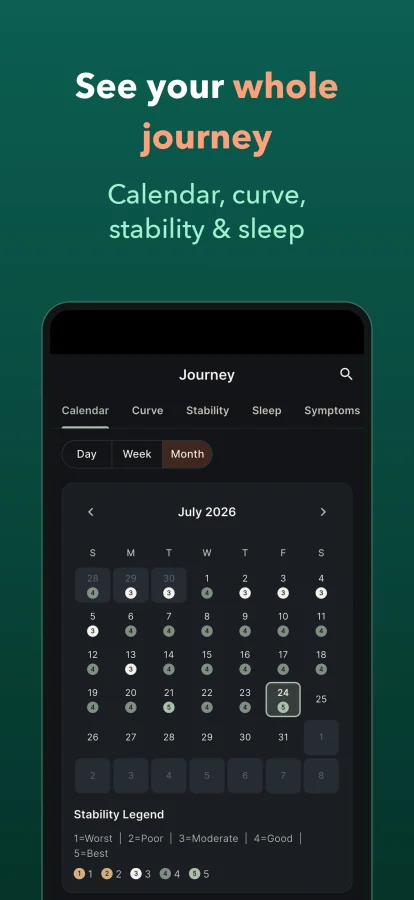

Why does gradual, hyperbolic tapering matter?
Withdrawal is common, not rare: in a systematic review, an average of 56% of people who stopped antidepressants experienced withdrawal symptoms, and nearly half of those described them as severe (Davies & Read, 2019, Addictive Behaviors).
Because the relationship between dose and receptor occupancy is hyperbolic, equal-size dose cuts hit harder and harder as the dose gets lower. Horowitz & Taylor (The Lancet Psychiatry, 2019) therefore recommend reducing by a proportion of the current dose — for example about 10% per step — so each step produces a similar change at the receptor level. This approach now anchors the Maudsley Deprescribing Guidelines (2024).
RxDown operationalizes this evidence for patients: proportional reduction schedules, occupancy curves you can actually see, and hold/reinstate states for when symptoms flare — always in partnership with your prescriber.
Your diary stays on your device
RxDown has no account and cannot see your logs. Your medications, doses, journal, mood, and voice transcripts are stored locally on your phone. When you use an AI feature, only the content of that request is processed — and it is never used to train models. We never sell health data. This website sets no cookies and runs no ad trackers.
Read the full privacy policy →Questions people ask
What is RxDown?
RxDown is a medication-withdrawal diary app for iOS and Android. It helps adults working with a doctor to gradually reduce antidepressants, benzodiazepines, sleeping pills, opioids, and other long-term prescriptions — with AI voice journaling, guideline-based reduction schedules, symptom and sleep tracking, and a clinician-ready Doctor Report.
Is RxDown free?
Yes — downloading, daily logging, reminders, and reduction schedules are free forever. Optional Plus and Pro subscriptions unlock AI features: voice-to-entry journaling, AI symptom analysis, and AI schedule suggestions. A free lifetime trial quota lets you test every AI feature before paying.
Does RxDown give medical advice?
No. RxDown is a tracking and education tool for adults aged 18 and over. It does not provide medical advice, diagnosis, or treatment, and its charts and AI insights are informational only. Any change to your medication should be made with a qualified healthcare professional.
Start your diary tonight
Free to download, free to log every day. Bring your first week of real data to your next appointment.
Looking for RxTaper? You're in the right place — RxDown is its new name.