 RxDown
Evidence reviewed through:
⚕️ This article is education, not medical advice. Every claim is sourced below. Never stop or change medication without your prescriber — some medications are dangerous to stop abruptly.
Proton-Pump Inhibitor Deprescribing: Rebound Acid Symptoms and Reasons Not to Stop
Key answer
A specialist-review guide to proton-pump inhibitor deprescribing, rebound acid symptoms, indication review, step-down options, and conditions that may require continued treatment. The central safety principle is: Confirm why the proton-pump inhibitor was started and whether the indication is still present. [1–2]
A safe interpretation starts with the exact medication or intervention, the reason it is being used, the formulation, treatment duration, other medicines, current symptoms, and the risks of both continuing and changing treatment. The article therefore explains decision factors and safety boundaries rather than prescribing a fixed schedule.
At a glance
| Question or decision | Evidence-based answer |
|---|---|
| First step | Confirm why the proton-pump inhibitor was started and whether the indication is still present. |
| Common challenge | Transient rebound acid hypersecretion can cause upper gastrointestinal symptoms after long-term acid suppression is reduced or stopped. |
| Do not assume deprescribing is appropriate | Some severe erosive, bleeding-risk, Barrett esophagus, or other conditions may warrant ongoing therapy. |
| Possible approaches | Dose reduction, on-demand use, or stop with rescue therapy may be considered according to indication and clinician advice. |
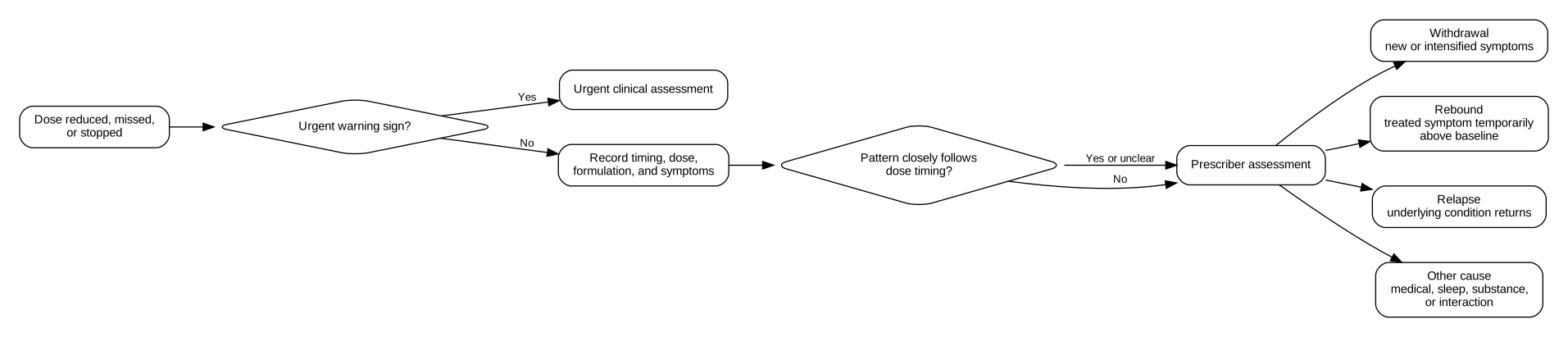
Evidence basis and uncertainty
This article prioritizes regulator-hosted product information, current clinical guidance, systematic reviews, randomized trials, and carefully labeled observational or mechanistic evidence. The references below are used according to their design and limitations [1–2]. Absence of a detected signal is not rewritten as absence of risk, and a population average is not presented as an individual prediction.
| Reference | Evidence type | How it is used in this article |
|---|---|---|
| 1 | Clinical practice guideline | Rebound acid symptoms may occur, but some patients have indications that require ongoing acid suppression. |
| 2 | Expert review | Centers indication review and identifies groups who should generally not discontinue without specialist assessment. |
Working definitions
| Term | Meaning in this article |
|---|---|
| Withdrawal symptoms | New or intensified symptoms after a dose reduction, missed dose, formulation change, or stop when physiologic adaptation is a plausible contributor. |
| Rebound | Temporary return of a treated symptom above its pretreatment baseline. |
| Relapse or recurrence | Return of the underlying treated condition. |
| Physical dependence | Physiologic adaptation; it is not the same as addiction or a substance use disorder. |
The indication is more important than the medication name
Proton-pump inhibitors may be used for reflux symptoms, healing of erosive disease, ulcer treatment, gastrointestinal bleeding prevention, Helicobacter pylori regimens, or other indications. The balance changes when the original risk is still present. Deprescribing should follow an indication review, not an assumption that all long-term use is unnecessary.
What rebound acid hypersecretion means
Acid-related symptoms can temporarily appear or intensify after acid suppression is reduced or stopped. Heartburn, regurgitation, or dyspepsia during this period does not automatically prove that lifelong treatment is required, but it also does not exclude active disease. Symptoms should be interpreted with alarm features and the original diagnosis.
Step-down and symptom support
Depending on the indication, options may include a lower dose, less frequent or on-demand use, transition to another acid-suppressing strategy, or stopping with short-term rescue measures. Diet, meal timing, weight, alcohol, tobacco, and medications that worsen reflux may be reviewed. A fixed method is not superior for every patient.
Who may not be a routine deprescribing candidate
People with severe erosive esophagitis, esophageal ulcer or stricture, Barrett esophagus, eosinophilic esophagitis, high upper-gastrointestinal bleeding risk, or another ongoing specialist indication may require continued therapy. The exact list and recommendation depend on current guidelines and patient factors.
Evidence limits
Deprescribing guidelines support indication review and several reasonable approaches, but rebound incidence and duration vary. Symptom recurrence cannot always be classified remotely. Publication should include regional red-flag pathways and should not promise that a taper prevents all rebound.
When urgent medical assessment may be needed
    Seek urgent local medical assessment when any of the following applies. This list is intentionally conservative and is not a diagnostic checklist:

- Vomiting blood, black stool, fainting, or signs of significant bleeding-
Progressive trouble swallowing, food impaction, or painful swallowing
-
Unexplained weight loss, persistent vomiting, anemia, or severe abdominal pain
-
Chest pain or breathing difficulty that could represent a cardiac or pulmonary emergency
Emergency pathways and telephone numbers vary by country. A tracking application or educational article cannot rule out an emergency.
Questions to take to the prescriber
- What is the current indication and treatment goal?
- Which alternative explanations for the symptoms need assessment?
- What is the exact medication, formulation, timing, and most recent change?
- Which outcome should be monitored before another change is considered?
- What are the urgent warning signs and the fastest route back to the clinical team?
Frequently asked questions
Is rebound acid the same as my reflux returning?
Not necessarily. Timing and later course may help, but active reflux and rebound can overlap.
Must every proton-pump inhibitor be tapered?
No universal method is required; the indication, exposure, symptoms, and clinician plan determine the approach.
Can an H2-receptor antagonist be used?
It may be an option for some people, but interactions, kidney function, tolerance, and the indication should be reviewed.
What symptoms require prompt assessment?
Trouble swallowing, gastrointestinal bleeding, persistent vomiting, unexplained weight loss, anemia, or chest pain need evaluation.
Regional and formulation note
Guidelines, labels, formulations, and care pathways vary by country. Verify the exact product label, manufacturer, strength, release system, and local clinical pathway before use. A tablet or capsule instruction that is correct for one product may be wrong for another.
References
-
Evidence-based clinical practice guideline for deprescribing proton pump inhibitors. Evidence type: Clinical practice guideline. Use in this article: Rebound acid symptoms may occur, but some patients have indications that require ongoing acid suppression.
-
American Gastroenterological Association Clinical Practice Update on De-Prescribing of Proton Pump Inhibitors. 2022. Evidence type: Expert review. Use in this article: Centers indication review and identifies groups who should generally not discontinue without specialist assessment.

Bring real data to your doctor
Generate a clinician-ready Doctor Report in SBAR format with trend charts, plus clean CSV and PDF exports. Walk into your next appointment with evidence, not guesswork.
RxDown is a data tracking and journaling tool for adults (18+). It does not provide medical advice, diagnosis, or treatment. Never stop taking medication or change your dose based solely on information from this app or website — medication reduction should always be supervised by a qualified healthcare professional.